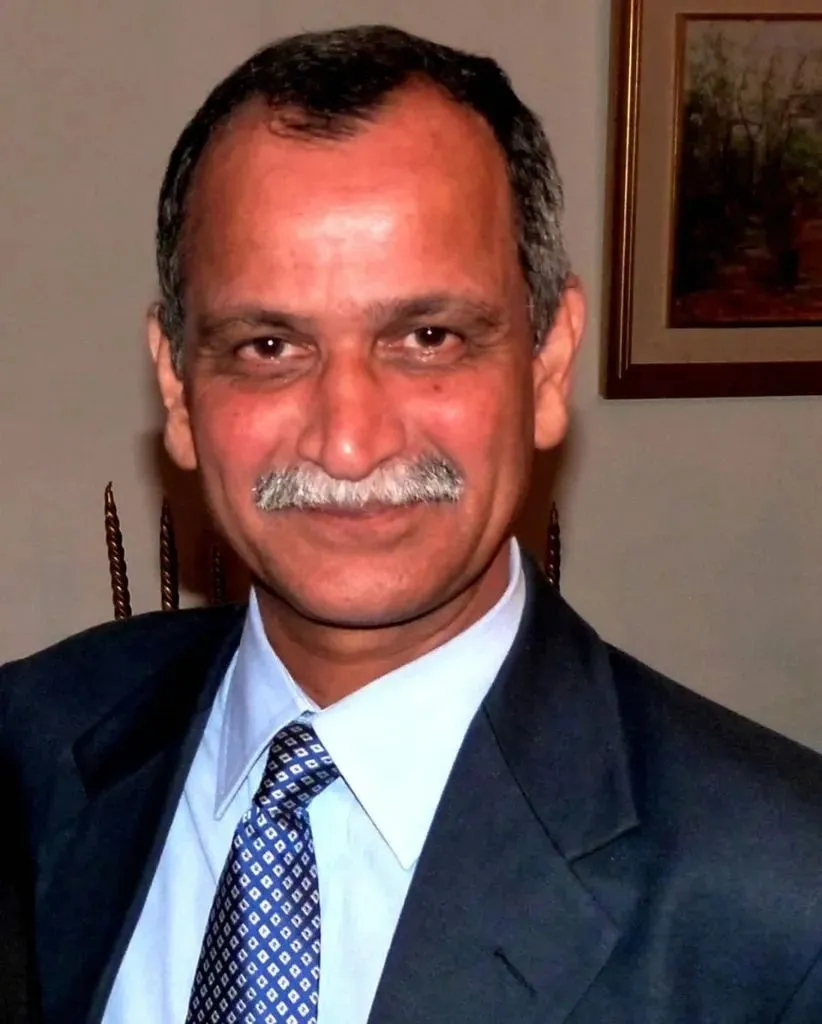
Interview Session with
Mr. Amarendra Khatua, Former Ambassador India to Argentina, Uruguay and Paraguay Senior Advisor, BRICS CCI
As a former ambassador, could you share some memorable moments or achievements during your tenure that significantly impacted India’s position and engagement within the BRICS group?
India’s position inside BRICS is towards reaching consensus with world’s leading, economically important, politically active and multilaterally super entities- nations to support its own growth and bilateral and multilateral aspirations as well as to actively cooperate with other BRICS countries in the globalization process, creation of a just order, bridging skill and economic differences between the developed and developing and least developed and attaining the SDG in a time bound and orderly manner. Engagement process is both bilateral, multilateral and in BRICS summit meetings and deliberations.
BRICS countries have diverse cultural, economic, and political backgrounds. How does India navigate these diversities to build consensus and drive collaboration on various agendas?
While BRICS agenda and priorities include developing a partnership towards an equitable just transition including managing the risks associated with climate change, transforming education and skill development for the future, unlocking opportunities through the African Continental Free Trade Area, time has come for BRICS nations to develop a short and medium term follow up action norms for all the economic, scientific, developmental, financial, multilateral and other identified goals, priorities and agenda items (Political issues with different approaches and political differences among member countries or being faced by member countries could be kept in the long term delivery basket without impacting other mentioned issues and may be tracked over medium and longer-term follow-up approach). Consensus and follow-up at BRICS countries’ foreign ministries level are requisite and the implemented priorities must become global and multilateral documents of cooperation and institution-building.
As the global geopolitical landscape evolves, how do you see the relevance and future prospects of BRICS in shaping international decision-making and policies?
Till now, the delivery schedule of BRICS is slow and limited. Russian Federation is confronting a war, China is yet to resolve border issues with India, Brazil and South Africa are facing severe economic and financial problems nationally. However, despite these problems and constraints, BRICS has the leadership position and political framework to lead, cooperate, collaborate and work together on global issues of relevance and priorities. Developing nations and LDCS are waiting for assistance, approach and policy and technical credit support eagerly. Multilateral bodies like the UN, WTO, WHO, FAO and other bodies actively need support and the leading role of BRICS for reforms, growth and fulfillment of SDG and other targets.
In your view, what are the most significant achievements that India has made within the BRICS framework, and how do these achievements contribute to its national interests and global influence?
India’s role during the COVID-19 pandemic and its covid diplomacy, India’s ongoing developmental, technical cooperation and education, vocational and other training related assistance to African countries (in this context India’s strong support to BRICS and Africa: partnership for mutually accelerated growth, sustainable development and inclusive multilateralism taken up in the 22-24 August BRICS Summit at Sandton, South Africa), India’s contribution to UN’s international peacekeeping operations and efforts towards ending conflicts, humanitarian crises and refugee situations are some of the significant Indian achievements in the context of BRICS priorities. India also through its extended assistance to world in satellite launching, its continuing aids and grants to LDCs and strong support and leadership role in SDGs is working with BRICS and other global partners well.
How has India leveraged its historical ties and cultural connections with other BRICS nations to foster stronger diplomatic relations and collaboration within the group?
Traditionally India has very strong trade and economic and political relations with Russia. Our support to South Africa’s decades long struggle against appatheid, to leadership of Mandela and economic and technical assistance and presence of a strong disciplined and vibrant Indian diaspora and growing trade and technological cooperation are deepening factors in India-south Africa relations. Traditionally in almost all multilateral bodies, India and Brazil fought together to safeguard interests of the south (bilateral cooperation in all sectors slowly increasing between the two counties). Despite the border issues, Indo Chinese commercial relations is one of the top five globally and annual growth is impressive. India’s trade with BRICS countries totaled a healthy $ 300 billion in 2022 (Including services trade). India also works closely with BRICS countries in the areas of UN reforms, WTO negotiations after the failed Doha Round, Climate Change, SDG, etc.
Six new nations, namely Iran, Ethiopia, Egypt, Saudi Arabia, UAE and Argentina, are set to join the BRICS alliance from 1 January 2024. What are your personal views on the potential benefits and challenges of adding a new member(s) to the group, and how might this affect the dynamics of cooperation?
As mentioned above, BRICS has a loaded workable agenda, though achievements are slow and will take time to be globalised. It has now been agreed to take six new members in BRICS- Ethiopia, Egypt, Argentina, Saudi Arabia, UAE and Iran. Expansion will bring new issues on agenda including resolution of disputes, functioning of regional and multilateral organisations, increasing aid and assistance to Africa, Consensus building in global issues of importance including climate change etc. Certain disagreements and initial issue oriented problems may cloud the agenda, but the expansion will cover now all parts of the developing world and almost all major regional BRICS leaders.
With your experience, what strategic areas should India prioritize for follow-up after the summit to ensure that the momentum and commitments generated translate into tangible benefits for the nation?
India’s priorities include enhancing economic cooperation and trade, promoting sustainable development and inclusive growth, facilitating political cooperation and mutual understanding among member and building intra-BRICS and global cooperation and joint work in the sectors of SMEs, infrastructure, agriculture, trade, energy, financial and banking. Since joining as a founding member of BRICS in 2009, India has worked towards consensus building among BRICS member countries on global, national and cooperation issues.
The G20 is a platform for multilateral diplomacy. How do you see India’s role in bridging differences and facilitating dialogue among member countries, especially on issues where consensus is challenging?
Consensus building will be a work in progress. As our Prime Minster has stated during his Summit participation, it is time to work together in a world which is now facing all sorts of problems including poverty, famine, war, pandemic, climate change, etc. and it is specifically a moral and political responsibility of BRICS nations as active world leaders to work together to help, identify and resolve the problems and work for a better future.
In your view, how does India’s G20 Presidency contribute to the nation’s stature as a responsible global actor, and how might it shape India’s role in international affairs beyond the presidency?
India’s G20 priorities include accelerated progress on SDGs (creating a 2030 SDG agenda and addressing COVID19 impact), technical transformation and digital public infrastructure, multilateral institutions for 21st century (inclusive, accountable and representative international system fit to address 21st century challenges), women-led development (empowerment and inclusive growth with development), accelerated, inclusive and resilient growth (addressing global skill gaps, inclusive agricultural value chain and food system, labour rights, MSMEs, structural transformation) and green development, climate finance and life that promotes environmentally conscious practices.